Welcome to a world where creativity blooms through recycling! We’re exploring recycled crafts that feed our artistic souls and help the planet. These budget crafts turn everyday items like egg cartons and cardboard into beautiful art.
Imagine making flowers from paper or animals from plastic bottles. Each project is an eco-friendly DIY adventure and a lesson in reducing waste. We’ve chosen five special upcycled art ideas that are good for the earth and lots of fun.
So, gather your materials, unleash your inner artist, and let’s start this creative journey together. It’s time to make the ordinary extraordinary!
Introduction to the Benefits of Recycled Crafts
Doing recycled crafts makes us more creative and helps us care for the planet. It teaches kids about being green. We learn to make art from things we already have. This makes us think about how much we use and waste. It’s a fun way to get creative and learn. It helps kids and adults alike.
In school, recycled crafts are super helpful. They help kids get better at using their hands. They also learn to enjoy making things. Things like making a recycling center or going on a recycling hunt are fun. They teach kids in a fun way. They make kids curious and want to learn more.
Recycled crafts mix art with caring for the Earth. They help us use less and waste less and have fun.
#1 Creative Bottle Cap Mosaic
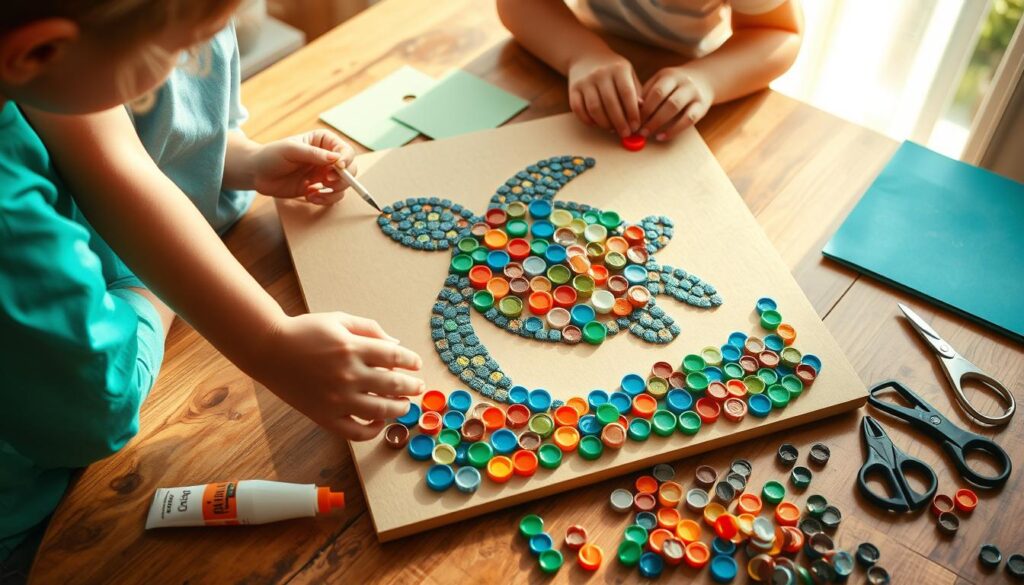
Give new life to colorful bottle caps by creating a vibrant mosaic that brightens your garden and sparks joy. This eco-friendly project is a great way for families to work together while turning everyday waste into meaningful art.
Materials Needed
- A variety of bottle caps (plastic or metal, in different sizes and colors)
- A sturdy backing board (such as MDF, thick cardboard, or an old tray)
- Strong adhesive like liquid nails glue or hot glue
- Pencil for sketching your design
- Optional: Clear sealant for a glossy finish
- Optional: Additional decorations like buttons or colored paper
Step-by-Step Instructions
- Plan Your Design
- Use a pencil to sketch a simple design onto your backing board. Nature themes like turtles, flowers, or ocean waves work beautifully!
- Arrange the Bottle Caps
- Lay out bottle caps along your design without gluing to see how they fit together. Experiment with colors and sizes to create patterns.
- Glue the Caps in Place
- Apply glue to the back of each bottle cap and press it firmly onto the board. Work in small sections to prevent the glue from drying too quickly.
- Add Finishing Touches
- Let the mosaic dry completely (at least one hour). If desired, paint any remaining background areas or seal the entire piece for added durability and shine.
Optional Variations
- Use smaller caps or embellishments like beads for intricate details.
- Turn your mosaic into wall art by attaching hooks to the back.
- Create themed designs for holidays or special occasions.
Benefits
These projects are great for kids. They help with fine motor skills and hand-eye coordination. They also teach about taking care of the environment.
There are many more ideas for bottle cap crafts. You can make coasters, necklaces, and more. Get creative!
#2 Toilet Paper Roll Sculptures
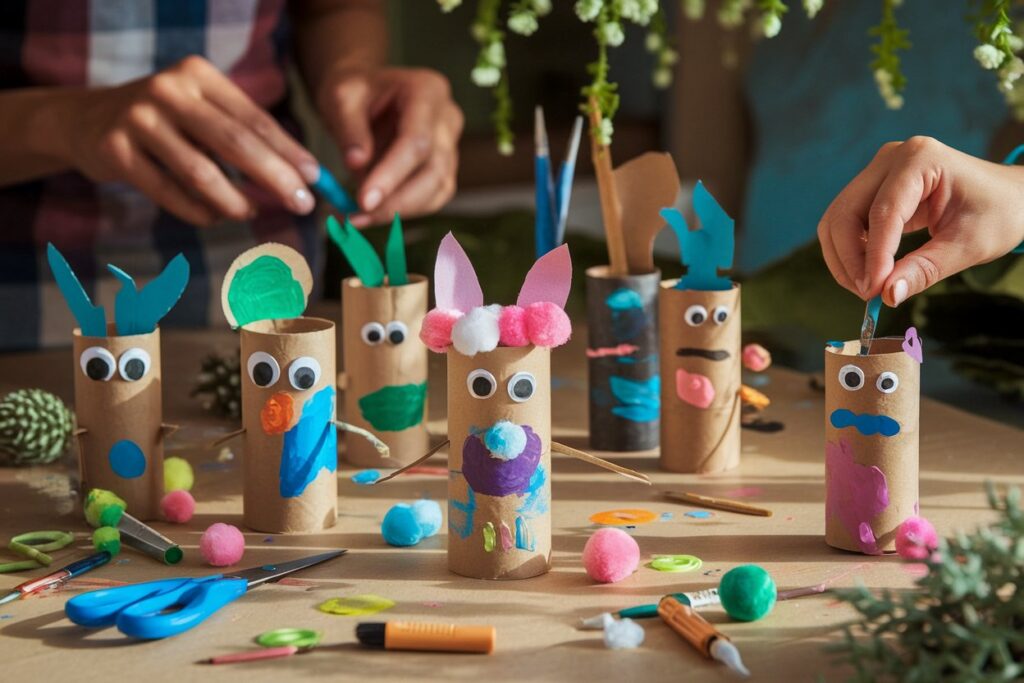
Who knew empty toilet paper rolls could become whimsical sculptures full of personality? This upcycled craft is perfect for letting kids and adults alike explore their imaginations while practicing creativity and environmental care.
Materials Needed
- Empty toilet paper rolls
- Craft paint and paintbrushes
- Strong glue (hot glue for faster results, or school glue for younger crafters)
- Scissors
- Decorations: glitter, pom-poms, googly eyes, ribbons, or beads
- Optional: Markers for fine details
Step-by-Step Instructions
- Plan Your Sculpture
- Think about what you’d like to create—an animal, robot, or abstract design. Encourage everyone to sketch their ideas first.
- Cut and Shape the Rolls
- Use scissors to trim or shape the rolls. You can make them taller, shorter, or even cut them into rings for added layers.
- Build Your Base
- Assemble your sculpture by gluing pieces together securely. Let each layer dry before adding the next to ensure stability.
- Paint and Decorate
- Once the glue is dry, paint your sculpture with bright, cheerful colors. Add details like stripes, patterns, or facial features.
- When the paint is dry, glue on fun decorations like pom-poms or ribbons for a playful touch.
- Show It Off
- Place your finished sculpture on display or give it as a handmade gift!
Optional Variations
- Make a collection of sculptures to tell a story, like a group of animals in a forest.
- Use recycled paper or tissue paper to create clothing or props for your sculpture.
- Turn it into a STEM project by designing structures that balance or move!
Benefits
This project helps develop problem-solving skills and encourages kids to think outside the box as they transform everyday items into unique art. It’s a mindful way to connect with family, unleash creativity, and reduce waste. Each sculpture becomes a special reminder of how playful imagination and eco-friendly choices can create something truly wonderful.
#3 Magazine Collage Art
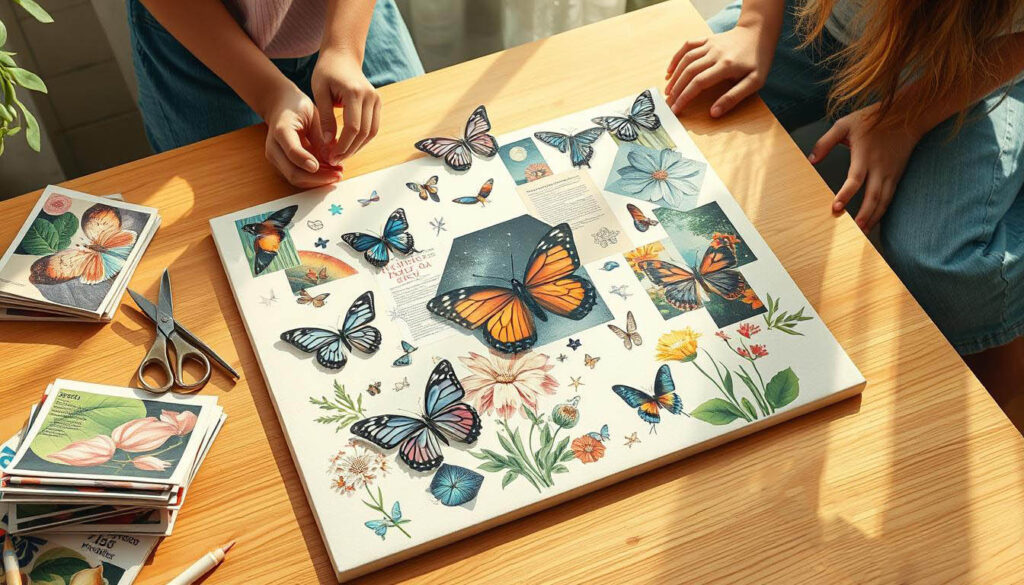
Magazines hold a world of images and words waiting to be transformed into beautiful art. Magazine collages allow you to express your creativity and tell your own story through vibrant visuals. It’s a great way to repurpose old magazines while exploring different textures and ideas.
Materials Needed
- Old magazines (various colors, patterns, and images)
- Scissors
- Glue stick or craft glue
- A sturdy base (cardboard, canvas, or thick paper)
- Paint or markers for added details
- Optional: Transfer paper for more creativity
Step-by-Step Instructions
- Choose Your Theme
- Start by thinking about what you want your collage to express. It could be a place, an emotion, or even an abstract idea.
- Cut Out Images and Words
- Flip through your magazines and cut out images, phrases, or textures that fit your theme. Don’t be afraid to experiment—mix and match different styles!
- Arrange the Pieces
- Lay out the cut pieces on your base without gluing them down first. Play around with the arrangement until you feel happy with the composition.
- Glue Everything Down
- Once your layout is ready, start gluing each piece onto the base. Smooth out any air bubbles or wrinkles to ensure everything sticks firmly.
- Add Depth and Details
- Use paint, markers, or more cut-out pieces to add depth, patterns, or extra details to your collage. Feel free to layer images for a richer texture.
- Seal and Finish
- To preserve your artwork, apply a coat of Mod Podge or decoupage medium over the entire collage. Let it dry completely.
Optional Variations
- Experiment with different textures like fabric or newspaper clippings.
- Create a themed collage, such as a nature scene or a vision board for personal goals.
- Make a collage from old postcards, photographs, or even maps!
Benefits
Magazine collage art encourages mindfulness by allowing you to focus on the present moment as you cut, arrange, and glue. It nurtures creativity, fine motor skills, and the ability to think in new ways. Plus, it’s a wonderful eco-friendly activity that turns unused magazines into something beautiful, while also providing a fun and relaxing creative outlet for the whole family.
#4 Recycled Crafts: Jar Lid Picture Frames
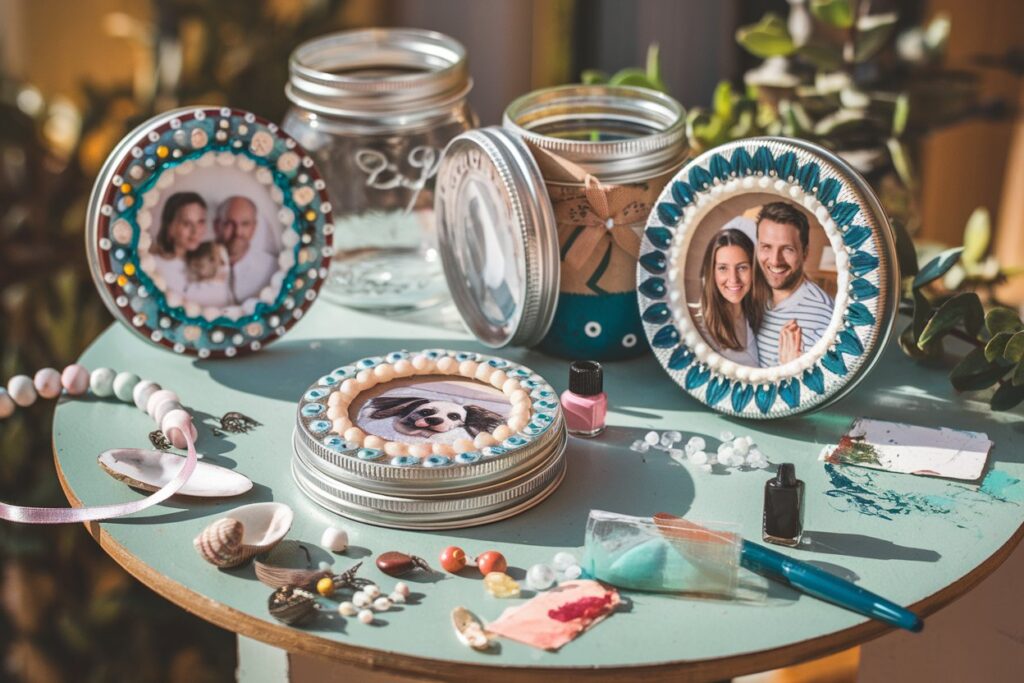
Repurpose mason jar lids into charming, one-of-a-kind picture frames that add a personal touch to any space. This fun and simple craft is a beautiful way to recycle and create meaningful gifts or home decor.
Materials Needed
- Mason jar lids (2 ¾” wide, or another size of your choice)
- Small photos (printed or cut to fit the lids)
- Craft glue or superglue
- Ribbon, buttons, or paint for decoration
- Optional: CraftSmart paints in Light Orange, Pink Blossom, or your favorite colors
- Optional: Hot glue gun for faster assembly
Step-by-Step Instructions
- Select Your Photo
- Choose a favorite small photo to fit inside the mason jar lid. Trim the photo if necessary, leaving a small margin around the edges.
- Prepare the Lid
- Clean the mason jar lid and place your photo inside it, ensuring it fits comfortably with just a bit of space around the edges.
- Glue the Photo
- Use craft glue or superglue to attach the photo to the lid. Press down gently to ensure it sticks securely. Allow it to dry for about 10 minutes.
- Decorate the Frame
- Once the photo is secure, it’s time to decorate the frame! Wrap a ribbon around the edge, or paint fun patterns and designs onto the lid. You can also glue buttons or other small embellishments for extra charm.
- Display or Gift
- Allow your frame to dry completely before using it. Hang it on a wall, place it on a shelf, or give it as a thoughtful gift to a loved one.
Optional Variations
- Use fabric or felt for a soft, textured frame.
- Turn your jar lids into a set of frames to create a gallery wall with matching photos.
- Add a magnet to the back and display your framed photo on the fridge!
Benefits
Creating these jar lid picture frames helps develop fine motor skills and encourages creativity as you design and decorate your frames. This project is also a mindful, eco-friendly way to reuse materials that would otherwise be thrown away. It’s a simple yet meaningful way to preserve memories and add personal touches to your home. Plus, it’s a wonderful way for families to bond while crafting together.
#5 Cardboard Weaving Art
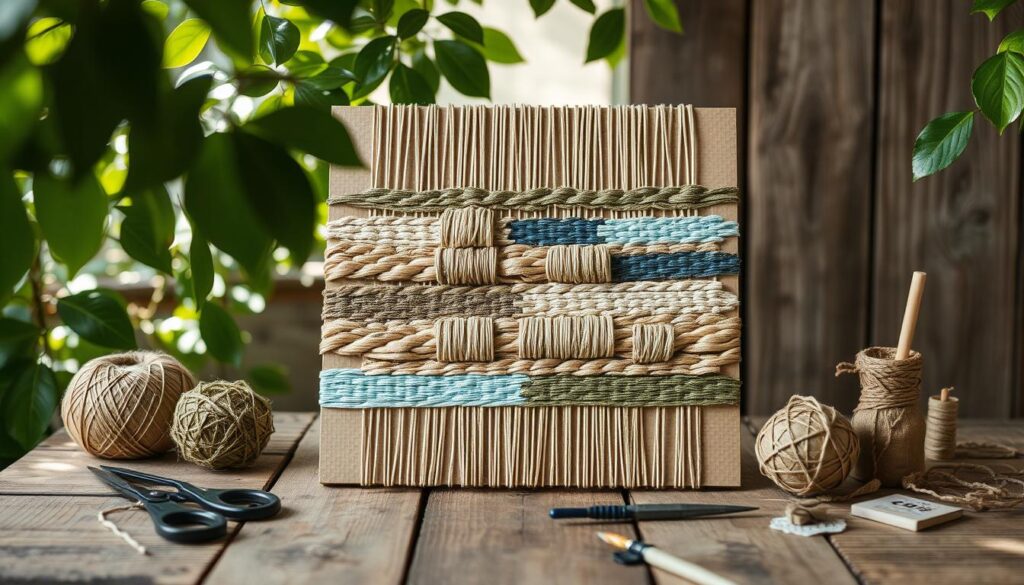
Cardboard weaving is a creative and relaxing way to transform simple materials into colorful, textured artwork. This project offers a perfect opportunity to experiment with different fibers, while also developing fine motor skills and patience. Whether it’s for a quiet afternoon or a family craft day, this project is ideal for all ages.
Materials Needed
- Stiff cardboard (A3 size or 12×16 inches recommended)
- Scissors
- Cotton twine, colored yarn, or fabric strips (1-2 inches wide)
- Ribbons or decorative threads for extra color
- A stick or dowel to hang the artwork
- Optional: Beads, pom-poms, or yarn tassels for added decoration
Step-by-Step Instructions
- Prepare the Cardboard Loom
- Cut a rectangular piece of cardboard to about 12×16 inches. At both ends of the cardboard, make small slits about ½ inch apart. These will hold your warp threads.
- Set Up the Warp Threads
- Cut long lengths of yarn or string and weave them through the slits at each end of the cardboard. Make sure the threads are taut, as these will be the foundation for your weaving.
- Start Weaving
- Begin weaving fabric strips, yarn, or twine over and under the warp threads. Keep the weaving even, but feel free to experiment with patterns. Kids can use simpler patterns, while older crafters can try more complex designs.
- Add Color and Texture
- As you weave, incorporate different colors, textures, and materials for a more vibrant design. You can even mix ribbons, pom-poms, or beads for extra flair.
- Finish and Secure
- Once you’ve completed your weaving, gently remove the cardboard loom. Secure the ends of the yarn or fabric with a knot to prevent unraveling. For an added decorative touch, you can attach yarn tassels or beads.
- Display Your Artwork
- Attach a stick or dowel to the top of the piece for easy hanging, and display your unique woven artwork with pride!
Optional Variations
- Create a series of weavings with different patterns and colors to make a beautiful set of wall hangings.
- Experiment with different fibers like raffia, leather strips, or felt for a more textured look.
- Use the weaving technique to create unique bookmarks, coasters, or table runners.
Benefits
Cardboard weaving encourages focus, patience, and creativity while promoting mindfulness in a calming, hands-on way. It helps develop fine motor skills and introduces the joy of working with textures and patterns. Plus, by using recycled materials like cardboard and fabric scraps, it’s a wonderful eco-friendly activity that brings people together and fosters a sense of accomplishment. It’s a perfect way to unwind while making art that is both beautiful and sustainable.
Conclusion
Throughout these projects, we’ve discovered creative and budget-friendly ways to repurpose everyday materials. From colorful bottle cap mosaics to upcycled toilet paper roll sculptures, we’ve shown how plastic, paper, and fabric scraps can be transformed into beautiful works of art.
These activities remind us that creativity knows no bounds, and we can all make something meaningful, no matter our age or skill level. Each project encourages us to be mindful of our resources and the impact we can have on the planet.
By choosing to craft with recycled materials, we help reduce waste and contribute to a greener future. It’s shocking how much waste ends up in landfills, but with every craft project, we turn “trash” into treasure and make a positive difference.
Let’s keep nurturing our creativity and caring for our planet. Together, we can transform our homes, communities, and the world, one mindful art project at a time.