Welcome to a world of colorful stress relief. Here, creativity is your child’s best friend! In today’s fast world, it’s key to help our kids relax and share their feelings safely. Art is a magical way to ease stress, and I’m excited to share these fun art projects for kids aged 4 to 12.
These quick and easy art activities are calming and help kids use their creativity. They let your child explore their imagination while having fun! Imagine your child making colorful art, each stroke helping them feel better and express themselves.
Research shows art is great for emotional expression and easing anxiety. It can help lower stress by making the stress hormone, cortisol, go down and can also make people feel happier by raising dopamine levels. Activities like scribble art, mandala coloring, and finger painting let kids use their imagination and find calm. By doing art, kids learn important skills to handle stress. It’s a great way to keep their minds healthy and happy.
Let’s get our kids making art that’s not just pretty but also calming. It’s time to let their creativity shine!
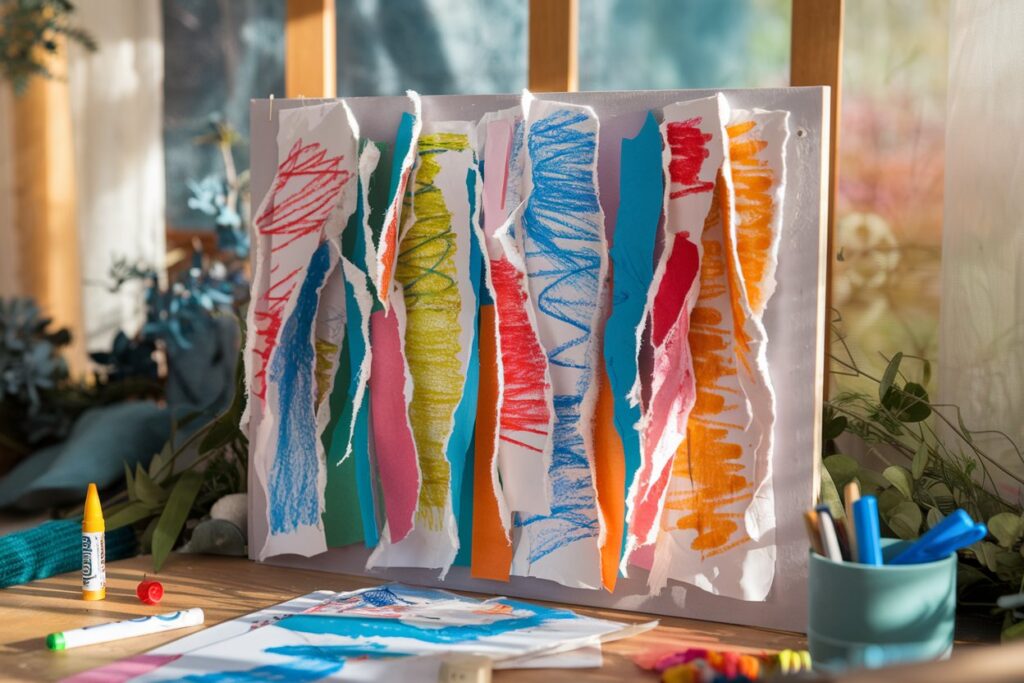
Activity #1: Scribble-and-Tear Art for Anger Relief
Scribble-and-tear art is a fun way for kids to release anger. It turns messy feelings into beautiful art. This activity helps kids express their emotions in a fun way.
Description
Kids get to scribble on paper to release their feelings. Then, they tear the paper to let go of those feelings. This shows the power of emotional exploration.
Suggested Materials
Here’s what you need to start:
- Paper (preferably thick drawing paper)
- Markers or crayons
- Scissors
- Glue
- A canvas or a larger piece of paper for displaying the final creation
You can also use colored papers or recycled stuff to make it more fun.
Instructions
- Give kids markers or crayons and let them scribble on paper. Tell them it’s okay if it’s not perfect.
- Then, ask them to tear the paper into shapes. They can make jagged edges for frustration or soft curves for sadness.
- Use the torn pieces to make a collage on a canvas. Glue them together to create something special.
- After it’s done, talk about what they made. This helps them understand their feelings better.
Benefits
This art project helps kids deal with anger in a good way. Tearing paper helps them feel better. It also helps them learn and grow.
They get to solve problems and make decisions. It’s a fun way to learn and grow.
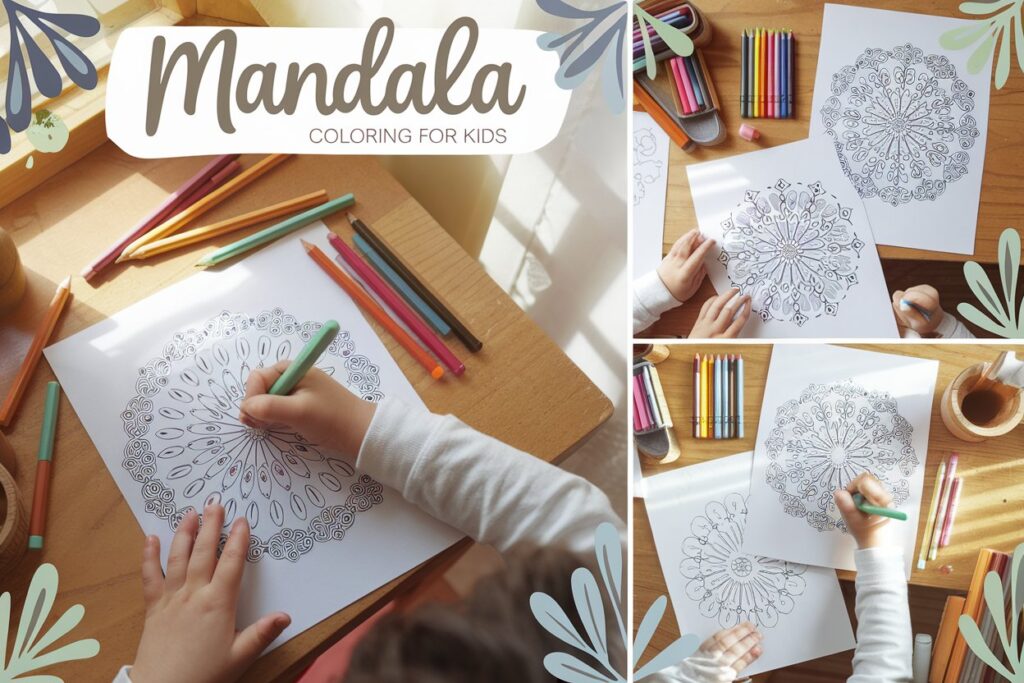
Activity 2: Mandala Coloring for Focus and Calm
Mandala coloring is a mix of creativity and mindfulness. It’s a great way to relax and focus. Kids love the detailed designs, which spark their creativity and calm their minds.
Description
Mandala coloring is like a calm art therapy. It’s a form of meditation with colors. It helps kids feel peaceful and calm, perfect for when they’re stressed.
Suggested Materials
Here’s what you need for mandala coloring:
- Mandala coloring pages (You can use the free downloadable mandala pages provided below to get started right away!)
- Colored pencils or markers
- A comfortable workspace
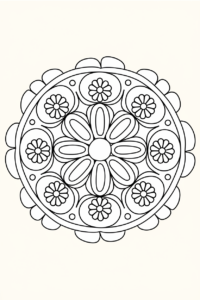
You can also make your own mandalas for a special coloring experience!
Instructions
Here’s how to start your mandala coloring:
- Choose a mandala page that your child likes.
- Make a calm space, maybe with soft music.
- Let your child color one part at a time.
- Remind them to breathe deeply while they color.
- After they finish, show off their artwork at home.
Benefits
Mandala coloring has many benefits. It helps kids focus and feel calm. It also helps them relax and feel less anxious. This activity boosts creativity and thinking skills, which is great in today’s busy world.
Activity 3: Finger Painting for Sensory Relaxation
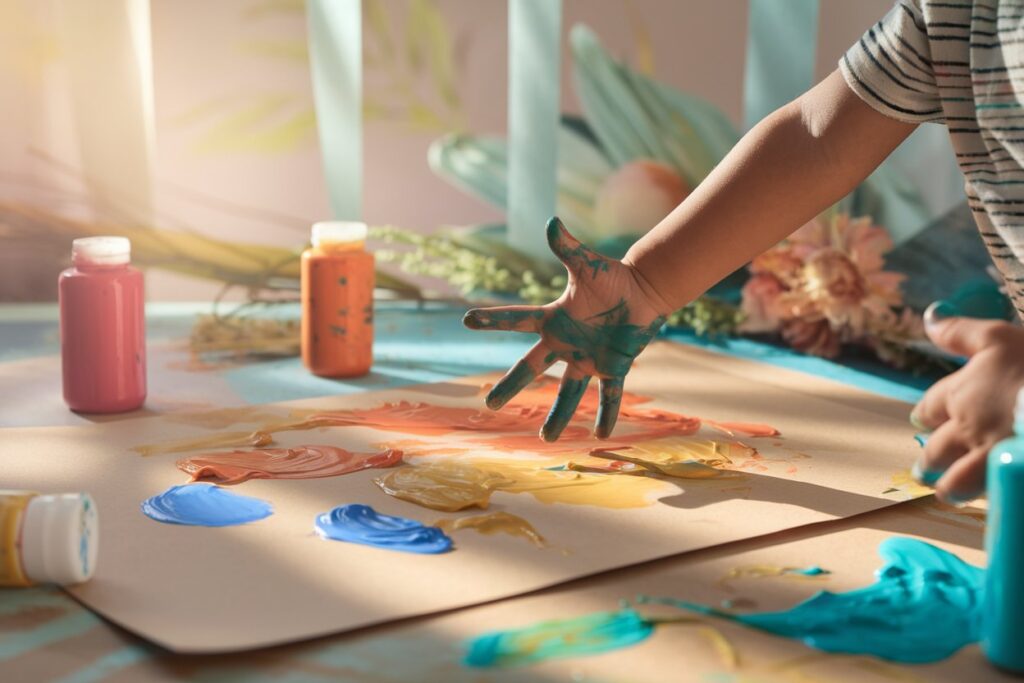
Finger painting is a fun and messy activity. It lets kids use their senses and be creative. It’s great for relaxing and having fun.
Description
Kids can use their fingers to make art. They get to play with colors and textures. It’s a way for them to express themselves.
Suggested Materials
You’ll need these things for finger painting:
- Non-toxic finger paints
- Large sheets of paper or canvas
- Aprons or old clothes to minimize mess (trust me, it can get messy!)
- Optional: sponges or brushes for added texture
Instructions
Here’s how to do finger painting:
- Lay down large sheets of paper on a flat surface.
- Squirt a variety of vibrant finger paint colors onto the paper.
- Let the kids go wild—encourage them to dip their fingers and hands into the paint to create whatever comes to mind!
- Encourage children to experiment with different movements, textures, and mixing colors.
- Once done, proudly display the art as a vibrant creation that captures their mood.
Benefits
Finger painting is good for kids. It helps them be independent and learn new things. It also helps them relax and feel better.
It’s safe for kids because it uses non-toxic paints. Every time they paint, they express themselves. It’s very important for kids to grow up.
Tips for Incorporating Creative Mindfulness into Daily Life
Adding creative mindfulness to your day can make you feel better. Here are some easy tips:
- Start Small: Dedicate just 5 minutes a day to creative time. Simple activities like doodling or journaling can help you connect to the present moment.
- Embrace Play: Let go of expectations and have fun with your creativity. Play with colors and textures without worrying about the end result.
- Nature Connection: Step outside and let nature inspire you. A walk or even a few moments in your garden can bring mindfulness into your creative practice.
- Create a Peaceful Space: Set up a cozy corner where you can relax and let your creativity flow, turning it into a mindful ritual in your daily routine.
- Practice Gratitude: Before and after your creative practice, take a moment to appreciate the process and your creativity—it’s a simple way to cultivate mindfulness.
Let’s Make Mindful Moments Together!
Stress is a part of life, but with creative mindfulness, we can turn those moments into opportunities for growth and self-expression. These quick and easy art activities are not just ways to relax—they are tools that help children build emotional resilience and develop a deeper connection to themselves. Whether it’s through scribbling out anger, focusing on mandalas, or feeling the textures of finger painting, each creative act is a step toward a calmer, happier mind.
So, why not make a little time today for some mindful art? Watch your kids not only de-stress but also discover the joy of creating from within. And remember—every moment spent on creativity is a moment of connection, healing, and fun.
Feel free to share your experiences with these activities in the comments below—I’d love to hear how they worked for your family!